The Magic of Reality is a new book by Richard Dawkins. I've read a few of his books before so when I saw this one I thought it might be a bit of a repeat of what he's already written. But, when I noticed Dave McKean did the illustrations I immediately bought it.
Dave McKean has illustrated many of Neil Gaiman's books and graphic novels and I love his work. He also directed MirrorMask, a film based on Gaiman's book. He uses everything - inks, paper, models, photographs. It's truly creative and amazing. And his work in The Magic of Reality takes his art to a new level.
The book is about how wonderfully magical science truly is. Richard Dawkins has beautifully explained some of the more complex concepts arranged in chapters that each start with a question. Dawkins then looks at the more colourful myths around these questions and then turns to the science behind it.
I thoroughly enjoyed the book. It has one of the best explanations of natural selection, evolution and plate tectonics I've ever read. And McKean's illustrations are unique and bring the scientific concepts to life. This is the first page :-):
Showing posts with label books. Show all posts
Monday, 26 March 2012
Saturday, 23 July 2011
Right to Left
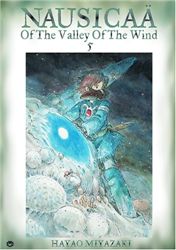
I mentioned Nausicaä before - she's from Miyazaki's manga and film of the same name. I've recently gotten all seven volumes of the manga and can't put them down. I have had to ration my reading so that I don't finish it too quickly.
When I showed some friends the manga, I hadn't realized how confusing it would be if you're not used to reading graphic novels. Firstly, it's quite different from reading a normal novel. You don't just read words - you look at the entire picture drawn for you in the panel. Secondly, the manga has been translated from Japanese so the entire setup reads from right to left. Very disconcerting if you're not used to it. Some people might ask why bother if it's so different? It's the story of course.
Nausicaä's adventure's and mishaps through the poisonous forests come alive in the manga. I was sucked into each and every page and couldn't believe the amazing world I was being drawn into. Graphic novels and manga tell stories in a completely different way than conventional books or even comics could. The scale of the story across volumes is different as well as the pace. More often than not much more time is spent on the smallest details and this is what makes the worlds created so real.
Sometimes reading something different opens up a whole new view to you. It also keeps Alzheimer's at bay since your brain is working extra hard to figure out what's happening on and between pages ;-).
I only have one more volume left and can't decided whether to read it right now or drag it out for a bit!
When I showed some friends the manga, I hadn't realized how confusing it would be if you're not used to reading graphic novels. Firstly, it's quite different from reading a normal novel. You don't just read words - you look at the entire picture drawn for you in the panel. Secondly, the manga has been translated from Japanese so the entire setup reads from right to left. Very disconcerting if you're not used to it. Some people might ask why bother if it's so different? It's the story of course.
Nausicaä's adventure's and mishaps through the poisonous forests come alive in the manga. I was sucked into each and every page and couldn't believe the amazing world I was being drawn into. Graphic novels and manga tell stories in a completely different way than conventional books or even comics could. The scale of the story across volumes is different as well as the pace. More often than not much more time is spent on the smallest details and this is what makes the worlds created so real.
Sometimes reading something different opens up a whole new view to you. It also keeps Alzheimer's at bay since your brain is working extra hard to figure out what's happening on and between pages ;-).
I only have one more volume left and can't decided whether to read it right now or drag it out for a bit!
Friday, 15 July 2011
Quark
Quarks are elementary particles and are the building blocks of protons and neutrons which atoms are made of. I learnt this from Stephen Hawking's A Brief History of Time. And no, I'm not bragging, the book isn't at all difficult to follow and makes you feel super intelligent since you're actually understanding it. Hawking writes so easily, as if he's having a conversation with you. The book is fascinating and covers scientific theories from The Big Bang to quantum mechanics and the very sought after Unified Theory.
There are many books that cover similar ground with a slightly different focus. E=mc2 is one of my favourites written by David Bodanis and not only explains Einstein's formulation of this famous theory, but also all the work done before him. But, my number one favourite is definitely the three Science of Discworld novels.
As seen in the picture, the wizards of the Unseen University accidentally create a world (most probably ours). This world is not flat, has no magic, contains something the wizards have named narrativium and has numerous physical laws like gravity. The books follow the start of this new world and cover many theories and what-if experiments. For example, what if Darwin had actually decided to carry on with his theological studies and not get on The Beagle? The books are divided into alternating chapters - one from the wizards perspective as they fiddle with the new world (Terry Pratchett) and the other are the more scientific chapters (Ian Stewart and Jack Cohen).
All of these books does make you wonder what the hell we're thinking. This is our one and only planet in our one and only life-sustaining (so far as we know) solar system - once we've polluted it to an uninhabitable state (which could be before, during or after we kill each other with weapons of mass destruction), we won't be able to simply fly to the next solar system and colonize Earth 2. Science and technology isn't progressing nearly fast enough for that to happen.
I don't want to be all doom and doom, but it does make me think that getting angry because your neighbour's praying to Buddha or because he wants to marry his boyfriend is such a waste of energy. We really need to start building a friggin' spaceship!
There are many books that cover similar ground with a slightly different focus. E=mc2 is one of my favourites written by David Bodanis and not only explains Einstein's formulation of this famous theory, but also all the work done before him. But, my number one favourite is definitely the three Science of Discworld novels.
As seen in the picture, the wizards of the Unseen University accidentally create a world (most probably ours). This world is not flat, has no magic, contains something the wizards have named narrativium and has numerous physical laws like gravity. The books follow the start of this new world and cover many theories and what-if experiments. For example, what if Darwin had actually decided to carry on with his theological studies and not get on The Beagle? The books are divided into alternating chapters - one from the wizards perspective as they fiddle with the new world (Terry Pratchett) and the other are the more scientific chapters (Ian Stewart and Jack Cohen).
All of these books does make you wonder what the hell we're thinking. This is our one and only planet in our one and only life-sustaining (so far as we know) solar system - once we've polluted it to an uninhabitable state (which could be before, during or after we kill each other with weapons of mass destruction), we won't be able to simply fly to the next solar system and colonize Earth 2. Science and technology isn't progressing nearly fast enough for that to happen.
I don't want to be all doom and doom, but it does make me think that getting angry because your neighbour's praying to Buddha or because he wants to marry his boyfriend is such a waste of energy. We really need to start building a friggin' spaceship!
Wednesday, 29 June 2011
Pippi Longstocking
For my birthday, my mom got me Pippi Longstocking by Astrid Lindgren. I've of course heard of Pippi, but had never read any of her stories. What an amazing girl!
Pippi is definitely one of kind. She's super strong, loves her life and stands up for what she believes in. Pippi doesn't go to school, lies quite often and is very unconventional. This can be explained, as Pippi often does, by the fact that her mother is in heaven and her father is king of the natives on an island (he fell overboard while they were at sea).
Her complete acceptance (or utter denial) of her situation is heart warming. Pippi lives alone and looks after herself - enjoying every minute of every day. Grown-ups and children of all ages can learn some valuable life lessons from Pippi. Or just simply enjoy her antics!
Pippi is definitely one of kind. She's super strong, loves her life and stands up for what she believes in. Pippi doesn't go to school, lies quite often and is very unconventional. This can be explained, as Pippi often does, by the fact that her mother is in heaven and her father is king of the natives on an island (he fell overboard while they were at sea).
Her complete acceptance (or utter denial) of her situation is heart warming. Pippi lives alone and looks after herself - enjoying every minute of every day. Grown-ups and children of all ages can learn some valuable life lessons from Pippi. Or just simply enjoy her antics!
Sunday, 12 June 2011
Michele MacFarlane
I was trawling through various book sites and came across The Au Pair by Michele MacFarlane. This is her first book and is an autobiography about how her entire life changed when she fell in love with her au pair.
The story follows Michele as she handles her marriage and new relationship with her au pair, Marizette, who's much younger and very Afrikaans. As their friendship grows into something more, Michele takes you with her through her own self-doubt and rediscovery.
I loved that the story takes place in Cape Town - reading about familiar landmarks made the book more real and Michele's journey that much more touching. It does feel a bit like you're reading someone's diary - it can be disjointed and rambling. But, this is what it felt like for the author as her world came crashing down around her.
Overall, I enjoyed the book and was happy to see it on the shelves of local book stores. Definitely worth a read.
The story follows Michele as she handles her marriage and new relationship with her au pair, Marizette, who's much younger and very Afrikaans. As their friendship grows into something more, Michele takes you with her through her own self-doubt and rediscovery.
I loved that the story takes place in Cape Town - reading about familiar landmarks made the book more real and Michele's journey that much more touching. It does feel a bit like you're reading someone's diary - it can be disjointed and rambling. But, this is what it felt like for the author as her world came crashing down around her.
Overall, I enjoyed the book and was happy to see it on the shelves of local book stores. Definitely worth a read.
Saturday, 21 May 2011
Jabberwocky
"Beware the Jabberwock, my son,
the jaws that bite and claws that scratch
Beware the jubjub bird
and shun the frumious bandersnatch."
This poem is from Lewis Carroll's Through the Looking Glass, the sequel to Alice's Adventures in Wonderland. The poem is famous for being one of the greatest nonsense verses (in itself contradictory I thought) in the English language and was written in 1872. I love the story of Alice and her journey through Wonderland.
When the latest Alice in Wonderland film with Johnny Depp and Mia Wasikowska came out, I actually thought it was based on a series of books I had just finished reading by Frank Beddor. But, the film was loosely based on the original by Carroll. Don't get me wrong - I love the film. The creatures such as the Jabberwocky and the Bandersnatch were amazing and the colours of Wonderland beautiful. I found the music especially haunting and still listen to the soundtrack often.
The Looking Glass Wars is the first book in Beddor's trilogy about Alyss and Wonderland. In this story, Wonderland is real and Alyss actually only came to our world to hide. She is in fact a princess and her aunt is after her throne. When she came into our world, no-one would listen to her except the local reverend, Charles Dodgson (Lewis Carroll's real name). She told him everything about Wonderland and thought he understood. Alyss was completely betrayed when he turned it into a silly fairy tale book. As the years went by, Alyss grew up into Alice and left her childhood fantasies behind her. Until one day, when a loyal soldier came to take her back.
I truly enjoy it when classic fairy tales are re-interpreted and re-imagined. Wouldn't it be amazing if all our stories and fairy tales were actual historical accounts of other worlds and places :-)?
the jaws that bite and claws that scratch
Beware the jubjub bird
and shun the frumious bandersnatch."
This poem is from Lewis Carroll's Through the Looking Glass, the sequel to Alice's Adventures in Wonderland. The poem is famous for being one of the greatest nonsense verses (in itself contradictory I thought) in the English language and was written in 1872. I love the story of Alice and her journey through Wonderland.
When the latest Alice in Wonderland film with Johnny Depp and Mia Wasikowska came out, I actually thought it was based on a series of books I had just finished reading by Frank Beddor. But, the film was loosely based on the original by Carroll. Don't get me wrong - I love the film. The creatures such as the Jabberwocky and the Bandersnatch were amazing and the colours of Wonderland beautiful. I found the music especially haunting and still listen to the soundtrack often.
The Looking Glass Wars is the first book in Beddor's trilogy about Alyss and Wonderland. In this story, Wonderland is real and Alyss actually only came to our world to hide. She is in fact a princess and her aunt is after her throne. When she came into our world, no-one would listen to her except the local reverend, Charles Dodgson (Lewis Carroll's real name). She told him everything about Wonderland and thought he understood. Alyss was completely betrayed when he turned it into a silly fairy tale book. As the years went by, Alyss grew up into Alice and left her childhood fantasies behind her. Until one day, when a loyal soldier came to take her back.
I truly enjoy it when classic fairy tales are re-interpreted and re-imagined. Wouldn't it be amazing if all our stories and fairy tales were actual historical accounts of other worlds and places :-)?
Friday, 20 May 2011
If I Ran the Zoo
I love stories and firmly believe that ages given for books are only vague guidelines. If it's a good story, no matter if it's in the toddler section, I will read it. This is how I came across Dr. Seuss. I had seen his books in the library when I was very young and knew of them, but only became a real fan a few years ago.
Dr. Seuss is the pen name of Theodor Seuss Geisel, and American born in 1904. He ended up publishing 44 children's books which have reprinted numerous times and made into various television and film adaptations. His stories are known for their very colourful and fantastical illustrations of wonderful worlds and creatures. The stories always rhyme and he often uses his own words to make the rhyme work.
If I Ran the Zoo is about a young man who's not impressed by the zoo in his town. He imagines what kind of exotic animals he would have if he ran the zoo. As the story progresses, the boy's imagination gets wilder with each new animal he adds. I love this story simply because the child's imagination has no bounds - I would definitely go to the McGrew Zoo.
Dr. Seuss' stories are timeless - hopefully they will in print forever. I wouldn't want anyone, from this world or any other universe, to miss experiencing his books. Reading them out aloud should be one of life's mandatory pleasures :-).
Dr. Seuss is the pen name of Theodor Seuss Geisel, and American born in 1904. He ended up publishing 44 children's books which have reprinted numerous times and made into various television and film adaptations. His stories are known for their very colourful and fantastical illustrations of wonderful worlds and creatures. The stories always rhyme and he often uses his own words to make the rhyme work.
If I Ran the Zoo is about a young man who's not impressed by the zoo in his town. He imagines what kind of exotic animals he would have if he ran the zoo. As the story progresses, the boy's imagination gets wilder with each new animal he adds. I love this story simply because the child's imagination has no bounds - I would definitely go to the McGrew Zoo.
Dr. Seuss' stories are timeless - hopefully they will in print forever. I wouldn't want anyone, from this world or any other universe, to miss experiencing his books. Reading them out aloud should be one of life's mandatory pleasures :-).
Saturday, 14 May 2011
House of Suns
I've just finished reading House of Suns by Alastair Reynolds. My mind is still reeling. I have read some of his other books, but I've forgotten the immense scale of his novels.
House of Suns is set millions of years in the future. It concerns the House of Flowers also known as the Gentian Line. Abigail Gentian created 999 clones of herself and so established the Gentian Line. These 1000 scatterlings (which one being the original no-one knows) had one mission - to explore the furthest reaches of space. The scatterlings went on circuits around the galaxy and met up after each circuit to share their memories and experiences. At the time of the story, the scatterlings had been around for almost 6 million years. And this is where my mind starts to boggle.
As the scatterlings travel through space visiting planets, they very often meet different civilizations when they travel the same route on the next circuit. Their time scale is in thousands and hundreds of thousands of years due to the huge distances in space that needs to be covered. Civilizations die out and races evolve. I immediately thought of us. Homo sapiens originated about 200 000 years ago. Recorded history is thought to have started 4000 years BC, only 6000 years ago. In House of Suns the scatterlings have been around longer than the Earth!
I then wondered if we shouldn't be more concerned about the longevity of our human existence. If we want to extend beyond mere thousands of years, we need to seriously reconsidering our way of life. This is the only planet in this solar system which can sustain us. Do all the wars and other inter-racial/religious/method of egg boiling issues really matter?
But, getting back to the book. Purslane and Campion are two Gentian scatterlings who picked up a guest along their journey. As they travel to their reunion with the rest of the Gentian Line, secrets are revealed which they didn't even know existed.
Gripping novel! Everything time I read Alastair Reynolds, I'm reminded why I love his science fiction so much.
House of Suns is set millions of years in the future. It concerns the House of Flowers also known as the Gentian Line. Abigail Gentian created 999 clones of herself and so established the Gentian Line. These 1000 scatterlings (which one being the original no-one knows) had one mission - to explore the furthest reaches of space. The scatterlings went on circuits around the galaxy and met up after each circuit to share their memories and experiences. At the time of the story, the scatterlings had been around for almost 6 million years. And this is where my mind starts to boggle.
As the scatterlings travel through space visiting planets, they very often meet different civilizations when they travel the same route on the next circuit. Their time scale is in thousands and hundreds of thousands of years due to the huge distances in space that needs to be covered. Civilizations die out and races evolve. I immediately thought of us. Homo sapiens originated about 200 000 years ago. Recorded history is thought to have started 4000 years BC, only 6000 years ago. In House of Suns the scatterlings have been around longer than the Earth!
I then wondered if we shouldn't be more concerned about the longevity of our human existence. If we want to extend beyond mere thousands of years, we need to seriously reconsidering our way of life. This is the only planet in this solar system which can sustain us. Do all the wars and other inter-racial/religious/method of egg boiling issues really matter?
But, getting back to the book. Purslane and Campion are two Gentian scatterlings who picked up a guest along their journey. As they travel to their reunion with the rest of the Gentian Line, secrets are revealed which they didn't even know existed.
Gripping novel! Everything time I read Alastair Reynolds, I'm reminded why I love his science fiction so much.
Sunday, 8 May 2011
Fingersmith
Shortly after coming out to my parents, I started looking for anything vaguely lesbian. Be it books, films or music. I Google'd and Wiki'd and came across lists of best of books, films and so on. One of these was Fingersmith.
Fingersmith is a novel written by Sarah Waters and is her third book. It was preceded by Tipping the Velvet and Affinity and followed by The Night Watch and The Little Stranger. It's set in the Victorian era and is sort of a mix between a romance and a crime novel. Very good twists and turns. As the novel progresses, you also find yourself rooting for the one character, hating the other and then this gets turned around as the plot unfolds. Amazing writing.
I thoroughly enjoyed Tipping the Velvet and The Night Watch as well. Three of her books have been made into BBC serials and I highly recommend them. They remain quite true to the books and are superbly acted.
Fingersmith is a novel written by Sarah Waters and is her third book. It was preceded by Tipping the Velvet and Affinity and followed by The Night Watch and The Little Stranger. It's set in the Victorian era and is sort of a mix between a romance and a crime novel. Very good twists and turns. As the novel progresses, you also find yourself rooting for the one character, hating the other and then this gets turned around as the plot unfolds. Amazing writing.
I thoroughly enjoyed Tipping the Velvet and The Night Watch as well. Three of her books have been made into BBC serials and I highly recommend them. They remain quite true to the books and are superbly acted.
Tuesday, 3 May 2011
Catching Fire
The Hunger Games is the first book in a trilogy of the same name. Suzanne Collins wrote the series with Catching Fire being the second book and Mockingjay the final. The story is scary in that it feels like it can happen in the real world as well.
The first book was published in 2008, but I only came across the series end of last year while I was roaming through a bookstore in Sydney. When I got back home I immediately got hold of all 3 books and started reading.
The story is set in a post-apocalyptic world where a central government rules over 12 districts. The president not only has an iron fist but also keeps everyone in check with The Hunger Games. Participants are randomly selected from each district and then made to fight each other in a greatly popular and highly publicized game. There can be only one survivor and they win food and prestige for their district. The poor are exploited since they can enter their name for the selection process more than once in exchange for extra food.
The main character is Katniss Everdeen who volunteers to take her sister's place in the games. The books follow her through the games and it's consequences.
When I first read the blurb for the books, I was reminded of Battle Royale, a Japanese book (also adapted into a manga and movie). In this story, a group of students is forced to fight each other to the death on an island. This is meant to keep the population in check since the class of participants are chosen randomly and at any time during the year. The Hunger Games trilogy takes a slightly different route, but with great effect. How the characters handle the situation is so real that I had to take a break from the books every now and then.
What made it so more real is that reality shows such as Survivor and Big Brother are a step below The Hunger Games. The amount of publicity and television coverage the games garner is tremendous. What also struck me is the fact that many people only saw the games as something on television - that children were being killed wasn't real to them. Like a puppet theater arranged by the government. Very scary.
The books are planned to be made into a film, but I'm not sure if a movie can truly capture the trilogy. My imagination went wild thanks to the great writing. I hope the film can do The Hunger Games justice.
The first book was published in 2008, but I only came across the series end of last year while I was roaming through a bookstore in Sydney. When I got back home I immediately got hold of all 3 books and started reading.
The story is set in a post-apocalyptic world where a central government rules over 12 districts. The president not only has an iron fist but also keeps everyone in check with The Hunger Games. Participants are randomly selected from each district and then made to fight each other in a greatly popular and highly publicized game. There can be only one survivor and they win food and prestige for their district. The poor are exploited since they can enter their name for the selection process more than once in exchange for extra food.
The main character is Katniss Everdeen who volunteers to take her sister's place in the games. The books follow her through the games and it's consequences.
When I first read the blurb for the books, I was reminded of Battle Royale, a Japanese book (also adapted into a manga and movie). In this story, a group of students is forced to fight each other to the death on an island. This is meant to keep the population in check since the class of participants are chosen randomly and at any time during the year. The Hunger Games trilogy takes a slightly different route, but with great effect. How the characters handle the situation is so real that I had to take a break from the books every now and then.
What made it so more real is that reality shows such as Survivor and Big Brother are a step below The Hunger Games. The amount of publicity and television coverage the games garner is tremendous. What also struck me is the fact that many people only saw the games as something on television - that children were being killed wasn't real to them. Like a puppet theater arranged by the government. Very scary.
The books are planned to be made into a film, but I'm not sure if a movie can truly capture the trilogy. My imagination went wild thanks to the great writing. I hope the film can do The Hunger Games justice.
Sunday, 1 May 2011
Coraline
Coraline is a novel written by Neil Gaiman and isn't like other fairy tales. You have a girl going into another world and tempted by an evil witch, but there's so much more to Coraline. The novel was published in 2002, and I read the graphic novel based on the book.
Coraline, the title character, gets involved with this evil witch and then has to defend herself and her family from the consequences of her actions. The story includes two aging actresses, a cat who can move between worlds and a mouse circus. Need I say more :-).
A film based on the book was released in 2009 and used stop-motion 3D techniques. The film did change some things from the book, but brought Coraline's world to life with amazing effects. The colours and the music is brilliantly done and recreates Neil Gaiman's world perfectly (I thought so at least).
I love this kind of narrative - the off-beat, alternative fairy tale. Taking true and tested story stereotypes and turning them on their heads.
![]() |
| Coraline book cover (2002) |
A film based on the book was released in 2009 and used stop-motion 3D techniques. The film did change some things from the book, but brought Coraline's world to life with amazing effects. The colours and the music is brilliantly done and recreates Neil Gaiman's world perfectly (I thought so at least).
I love this kind of narrative - the off-beat, alternative fairy tale. Taking true and tested story stereotypes and turning them on their heads.
Monday, 18 April 2011
Un Lun Dun
China Miéville is an author I recently came across. The first book of his I read was Un Lun Dun. It follows the adventures of two young girls who discover a whole new world beneath London. UnLondon is filled with weird and strange creatures - a lot of what the true London has discarded. The girls arrive at a dangerous time when the world is threatened by Smog and they become embroiled in saving this alternate London.
I loved the whole idea of an alternate reality so close to the real one. China Miéville's writing is very engaging and I was completely drawn into Un Lun Dun. It reminded me of Neil Gaiman's Neverwhere, but aimed at a younger audience. One of Neil Gaiman's short stories is in a similar vein. It's about how the major cities in our world are actually asleep and that the day they decide to wake up we would all be in trouble.
With our expanding knowledge of the universe and the great leaps in technology, a lot of the magic has gone from our world. Writers like China Miéville and Neil Gaiman keep the magic alive and entertains the idea that there might still be some left :-).
Saturday, 16 April 2011
Third Thoughts
The first time I read a book by Terry Pratchett, I didn't even finish it. I didn't like it at all - the writing was confusing with no descriptions or stuff to fill in between all the dialogue. I couldn't get a handle on it. Then, since I hated quitting a book, I reread it slowly. Terry Pratchett challenges your imagination. You need to fill in the gaps yourself and can only do so when you imagine the situation completely. I haven't looked back since and have read every single of his Discworld novels and his other stories.
The witches in Discworld are in league of their own. Their powers do not lie in spells, potions or ancient rituals like the wizards, but rather in headology and an immense supply of self-confidence and obligation to what's right. If you haven't had the pleasure, I really recommend getting a hold of Witches Abroad or Lords and Ladies which are my favourite Discworld books featuring Granny Weatherwax and her unofficial coven.
We've all heard of second sight and having first thoughts. Witches take the more logical approach. First Sight is seeing what is really there (instead of what you think you should see). Second Thoughts are thinking about how you think about things. (Reading this last sentence again very carefully will help :-). Tiffany Aching, one of the more recent additions as a Discworld witch, sometimes even have third and fourth thoughts.
I love the whole idea behind First Sight and Second Thoughts. A lot of how what we say, how we react and what we do are based on society's norms and keeping the status quo. It's so easy just to follow the normal rules of behaviour than to actually analysing your own thoughts and actions and then deciding what you truly believe. I'm not saying societal norms are wrong - just that you should think about what you're thinking before you act. Is this really who you are? Or are you just trying to fit into the correct box or label?
Granny Weatherwax was once faced with a difficult choice. She was standing in a huge cavern filled with hundreds of identical reflections of herself. To live, she had to pick the correct one. Granny Weatherwax simply looked down at herself and said "This one." That's the kind of attitude I think we all should have :-)!
The witches in Discworld are in league of their own. Their powers do not lie in spells, potions or ancient rituals like the wizards, but rather in headology and an immense supply of self-confidence and obligation to what's right. If you haven't had the pleasure, I really recommend getting a hold of Witches Abroad or Lords and Ladies which are my favourite Discworld books featuring Granny Weatherwax and her unofficial coven.
We've all heard of second sight and having first thoughts. Witches take the more logical approach. First Sight is seeing what is really there (instead of what you think you should see). Second Thoughts are thinking about how you think about things. (Reading this last sentence again very carefully will help :-). Tiffany Aching, one of the more recent additions as a Discworld witch, sometimes even have third and fourth thoughts.
I love the whole idea behind First Sight and Second Thoughts. A lot of how what we say, how we react and what we do are based on society's norms and keeping the status quo. It's so easy just to follow the normal rules of behaviour than to actually analysing your own thoughts and actions and then deciding what you truly believe. I'm not saying societal norms are wrong - just that you should think about what you're thinking before you act. Is this really who you are? Or are you just trying to fit into the correct box or label?
Granny Weatherwax was once faced with a difficult choice. She was standing in a huge cavern filled with hundreds of identical reflections of herself. To live, she had to pick the correct one. Granny Weatherwax simply looked down at herself and said "This one." That's the kind of attitude I think we all should have :-)!
Subscribe to:
Posts (Atom)